
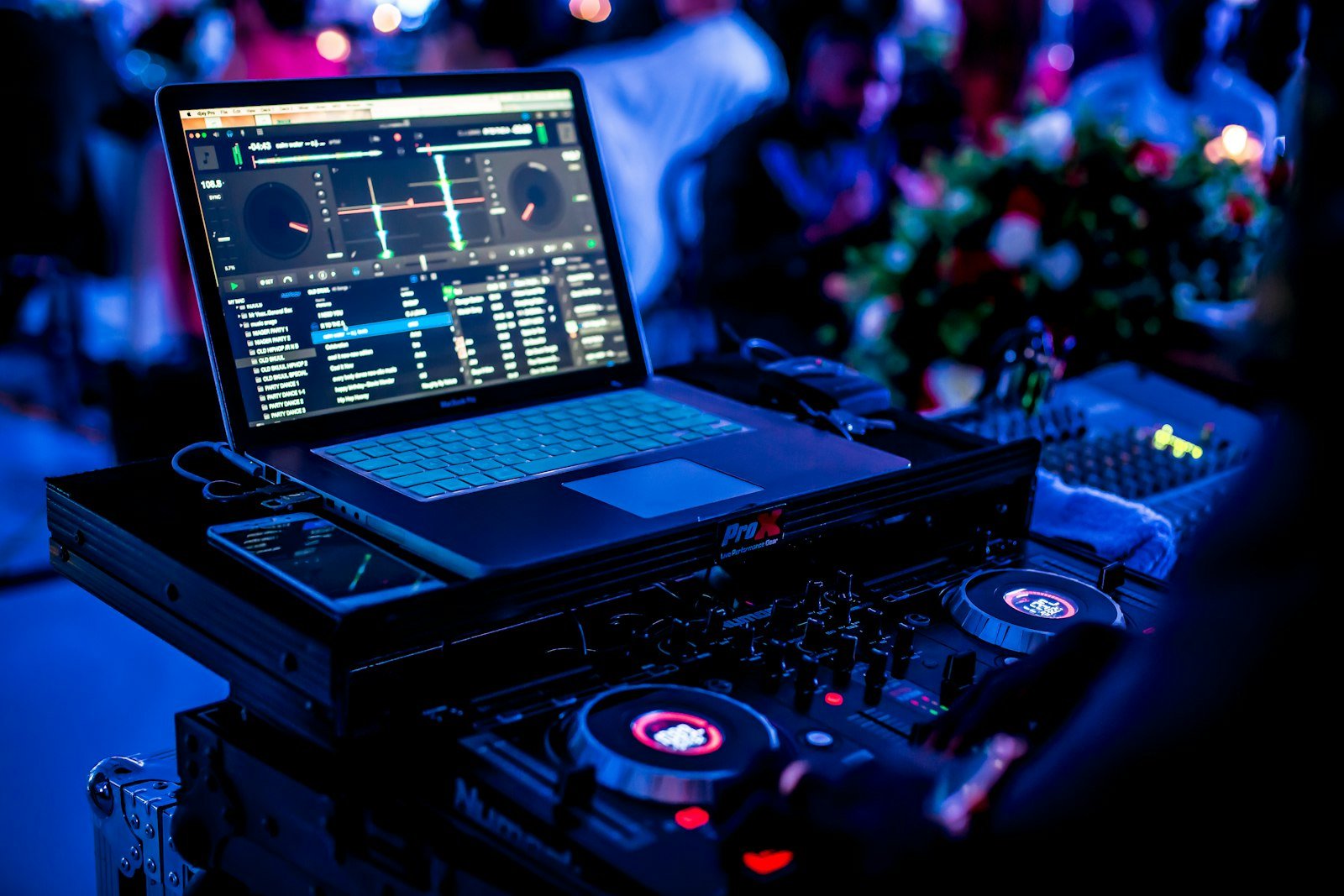
Who is this for? Beginners with a controller, or about to buy one, who want to record a clean mix they’d actually share. Journey time: 3 to 4 weeks.
1. Choose a two-channel controller and its software
A controller like the Pioneer DJ DDJ-FLX4 (rekordbox or Serato) or a Numark Mixtrack covers everything you need. Mixxx is free and supports many controllers.
2. Build a small, organized library
Buy downloads (Bandcamp, Beatport) so you own the files. Start with 30 to 40 tracks in one genre. Tag each one with its BPM and an energy level from 1 to 5.
3. Learn the mixer first
Channel faders, gain, EQ (low, mid, high) and headphone cue. Keep levels out of the red. Most rough mixes are a volume problem, not a skills problem.
4. Beatmatch by ear
Turn sync off while you practice. Cue the next track in your headphones, start it on the first beat, match tempo with the pitch fader, and nudge with the jog wheel. Ten minutes a day.
5. Mix on the phrase
Most dance tracks are built in 8-bar blocks that group into 16 and 32. Bring the new track in at the start of a phrase so changes land where listeners expect them.
6. Swap the bass
Never run two basslines at full. Cut the low EQ on the incoming track, then swap lows at a phrase change.
7. Plan your 20 minutes
Six to eight tracks, energy rising gently. Write the order and note where each transition starts.
8. Record it, then listen the next day
Mark every transition: clean, rough or train wreck. Fix the worst one first, then record again.
9. Play it for someone
A friend, a roommate, a small gathering. Playing for people teaches you more about energy than any tutorial.
You’re ready to begin. One genre, one short set, recorded weekly. Clean transitions come from repetition, not gear.
Was this guide useful?
A rating takes one tap and helps the next beginner find their way here.