
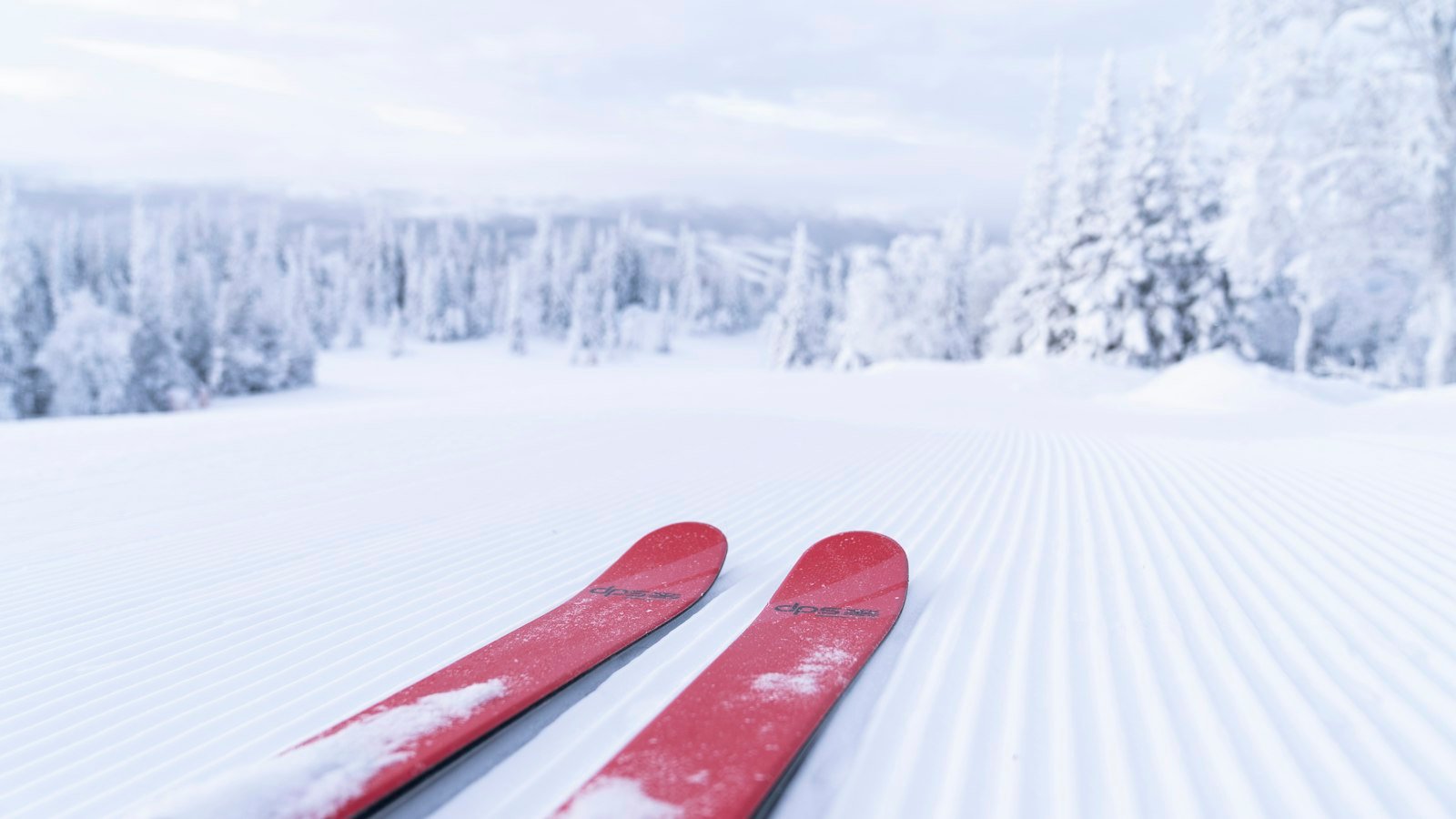
Who is this for? Adults who skied as kids or in college and haven’t been on snow in ten years or more. Journey time: one season, focused on your first three or four days back.
1. Get your legs ready now
Start in the fall. Squats, lunges and wall sits two or three times a week make your first day far less exhausting.
2. Expect the gear to feel different
Modern skis are shaped: shorter, with wider tips and tails. They turn much more easily than straight skis did. Rent or demo instead of digging out your old pair; many shops won’t adjust bindings that are no longer on manufacturers’ approved lists.
3. If you buy one thing, buy boots
Fit matters more than skis. Go to a bootfitter. Rental boots should be snug: toes lightly touching the front when standing straight, pulling back when you bend your knees. Wear a helmet; it’s standard now.
4. Book a lesson for your first morning
A group or private refresher resets old habits to modern technique. It is the fastest way to stop skiing like it’s 2008.
5. Warm up on green runs
Spend your first hour on the easiest terrain, even if you skied blacks at twelve. Try garlands (turning partway, then back across the slope) to rebuild edge feel.
6. Choose runs that stretch, not scare
Move up a level only when you can turn and stop comfortably where you are. New England snow is often firm, so smooth edging matters more than speed.
7. Keep the first days short
Two or three hours, with breaks. Stop while your legs still feel good.
8. Get ten seconds of video
Have a friend film you on an easy run. Look for leaning back, twisting your upper body, and hands dropping behind you.
9. Go back to the same mountain
Familiar terrain builds confidence faster than a big trip. Wachusett, Nashoba Valley, or a New Hampshire mountain within two hours of Boston all work well for a return season.
You’re ready to begin. Your body remembers more than you think. Give it easy terrain and a few days to catch up.
Was this guide useful?
A rating takes one tap and helps the next beginner find their way here.