
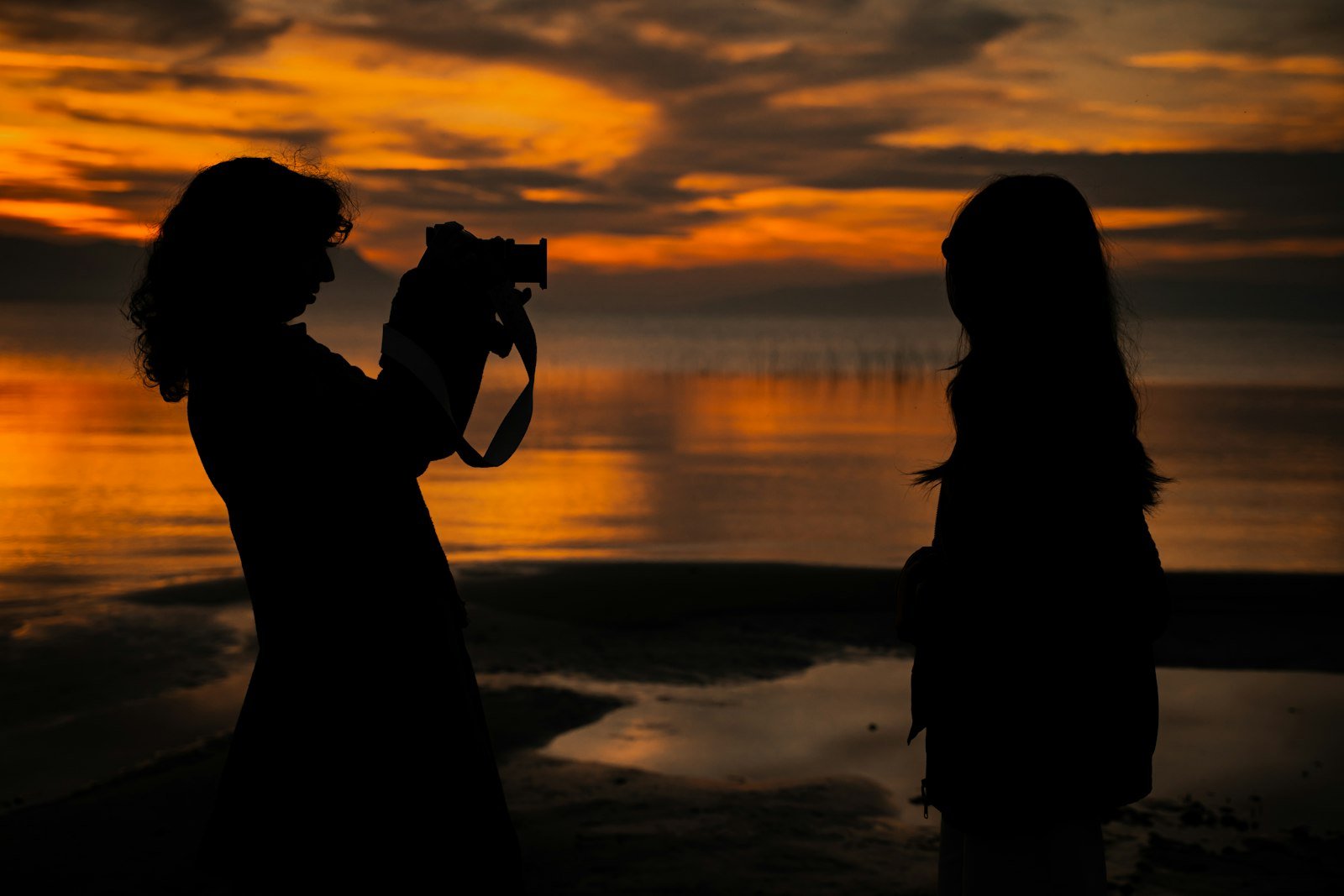
Who is this for? Hobbyists who love photographing people and want portraits that look relaxed, not posed. Journey time: 2 to 3 weeks.
1. Start with people who say yes easily
A friend, partner or sibling. Keep sessions to 20 minutes. Low stakes means you can experiment.
2. Use what you have
Any camera works, phones included. If you want one upgrade, a 50mm f/1.8 lens is the classic affordable choice for portraits on most systems.
3. Find the light before the pose
- Open shade: under a tree or beside a building
- Golden hour: the hour after sunrise or before sunset
- A window indoors
Avoid midday sun overhead. It puts dark shadows under the eyes.
4. Turn them toward the light
Rotate your subject until you see light reflected in their eyes. For more shape in the face, put the window to one side at about 45 degrees.
5. Start with simple settings
Aperture priority, f/2.8, auto ISO, shutter speed of 1/200 or faster. Focus on the nearest eye, or use eye detection if your camera has it.
6. Direct with actions, not poses
“Walk toward me slowly.” “Look at the tree, then back at me.” “Tell me about your worst haircut.” Movement and conversation create real expressions.
7. Fix stiffness with three cues
- Weight on the back foot
- A small gap between arms and body
- Chin slightly forward and down
8. Keep talking, and show an early win
Silence makes people tense. Ten minutes in, show them a frame you like. They relax once they trust the result.
9. Choose ruthlessly
Pick 10 from 200. Edit them consistently and send them within a week while the session still feels fresh.
10. When you want more, second-shoot
Offer to assist a working photographer at a wedding or event. You learn timing, pressure and people skills on someone else’s job.
You’re ready to begin. Good portraits come from good light and a relaxed person. The gear is the smallest part.
Was this guide useful?
A rating takes one tap and helps the next beginner find their way here.